Why Businesses Are Investing in AI Automation Services Right Now
Modern-day businesses are facing the immense pressure to deliver faster services, manage growing workloads
and keep a consistent customer experience. Conventional processes usually involve repetitive manual tasks,
disconnected software systems and time-consuming administrative work.
This is where AI Automation Services enable organizations to upgrade their operations. By
integrating artificial intelligence, machine learning and workflow automation, businesses can simplify
complex processes, improve productivity and make better use of available resources.
AI-driven solutions can help businesses work smarter and more efficiently without adding to their operational
load, from automating customer inquiries to streamlining internal operations.
For startups, enterprises, and growing eCommerce businesses, learning about AI automation can help you
identify opportunities to drive meaningful digital transformation.
What are AI Automation Services?
AI automation services involve the development, implementation and monitoring of intelligent systems that
execute tasks typically performed by humans. Basic automation is based on fixed rules, but AI automation
services use adaptive algorithms that learn from data and improve over time. This means fewer manual updates
and smarter decision-making built into your workflows.
A good AI automation agency
will usually start by auditing your existing processes to identify bottlenecks.
From there, they will design a custom plan for integrating AI into your existing software stack (whether
it's a CRM, an ERP or a simple spreadsheet system) into one automated pipeline. The result is a business
that is faster, less error-prone and lower overhead.
AI automation services are the design, deployment and management of intelligent systems to execute tasks that
were traditionally done by humans. Basic automation is based on fixed rules, but AI automation services use
adaptive algorithms that learn from data and improve over time. This means fewer manual updates and smarter
decision-making built into your workflows.
The Key Components of AI Workflow Automation
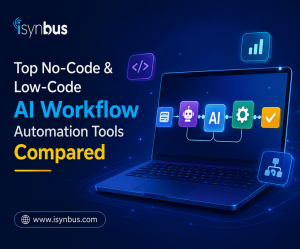
Most AI automation services are powered by AI workflow automation engines. AI workflow automation doesn't
automate one task in isolation; it connects multiple steps across departments into one seamless process. A
customer inquiry, for example, could set off a cascade of automated actions: ticket creation, data lookups,
drafting responses and scheduling follow-ups, all without a human touching a keyboard.
This is where AI-powered technology
earns its reputation as a real productivity multiplier, rather than just
a buzzword. Companies that use AI workflow automation have reported faster turnaround times, fewer
bottlenecks, and improved visibility into where processes break down. Together with good AI integration,
these workflows become self-optimizing over time, adapting to new data patterns without constant manual
reconfiguration.
How AI Integration Changes the Way Teams Work
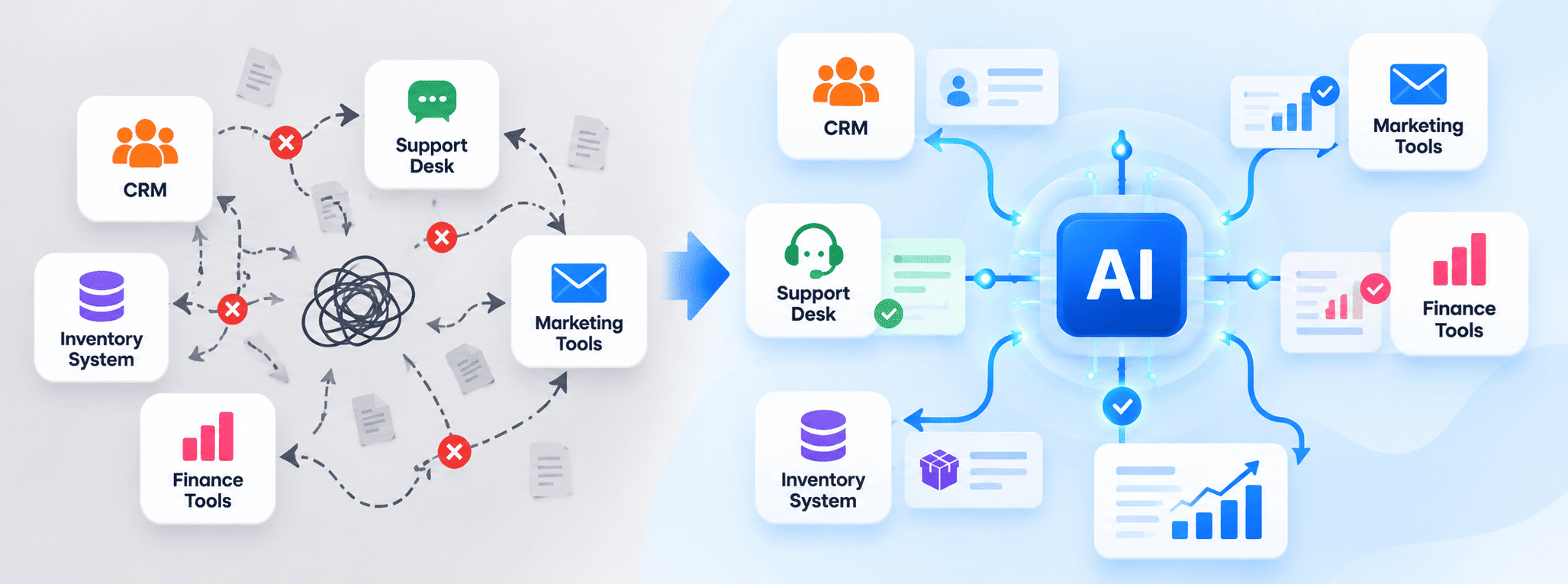
The technical backbone that makes AI automation services actually work in a business is AI integration. It's
the process of linking AI tools, APIs, and standard ML models to your existing software so that data flows
smoothly between systems. When AI is integrated poorly, it creates disjointed tools and duplicate work. With
strong AI integration, your CRM, support desk, inventory system and finance tools all talk to each other in
real time.
A professional AI automation agency views integration as the foundation, not an afterthought. They'll start
by mapping your existing data flow to find out where automation can make the most impact, before
recommending any AI-driven technology. This groundwork determines whether your AI automation services
deliver real value or just another disconnected tool in your stack.
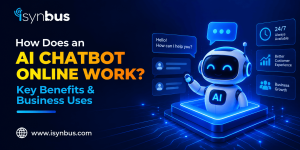
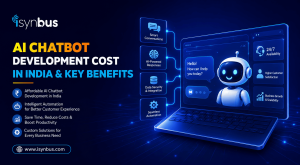
AI Chatbot Online Tools: A Frontline Use Case
A few examples show the power of AI automation services, such as an online AI chatbot. They answer customer
questions, process orders and troubleshoot issues 24/7, with no breaks and no waiting. A good AI chatbot
online is more than simply answering FAQs. It fetches live data, personalizes the responses, and escalates
complex issues to human agents only when required.
For businesses looking at AI automation services, getting an AI chatbot online is often the first, most
visible win. It reduces support costs immediately and gives customers quicker resolutions. A chatbot, when
integrated with wider AI workflow automation, is no longer a standalone gimmick but one node in a much
larger automated ecosystem.
Choosing the Right AI Automation Agency
Not all AI automation agencies are created equal in terms of the quality of their work. The best ones combine
technical proficiency with a grasp of the specific difficulties facing your industry. When evaluating an AI
automation agency, look beyond flashy demos and ask about their approach to AI integration, their experience
with AI workflow automation at your scale, and how they measure success after deployment.
| Evaluation Criteria |
What to Look For |
| Technical expertise |
Extensive experience with AI integration in CRMs, ERPs and custom applications |
| Industry fit |
Experience in your industry or a similar use case |
| Transparency |
Transparent reporting on automation performance and ROI |
| Scalability |
Scalability of AI workflow automation as your business grows |
| Support |
Ongoing maintenance for AI-powered technology, not a one-time setup |
A strong AI automation agency doesn't die after launch. It continues to fine-tune your AI automation services
as your business evolves, to keep the technology on top of new demands.
The Real ROI Behind AI-Powered Technology
Skeptics often ask whether investing in AI-powered technology is worth it. The data say yes. Businesses that
use AI automation services usually see lower labor costs, faster processing times and fewer costly errors in
the first few months. AI workflow automation eliminates repetitive manual work so employees can spend their
time on more valuable activities like strategy, sales and customer relationships.
And the compounding effect is important as well. As you automate more of your workflows and integrate AI,
each one builds on the last, making your systems smarter and more efficient over time. That is why companies
that begin early on with AI automation services tend to leave their laggard competitors in the dust; the
learning curve and the infrastructure are already in place.
Getting Started With AI Automation Services
If you are new to AI automation services, begin with a small project. Choose one repetitive, time-consuming
process—customer support, data entry or lead qualification—and try to automate it. That allows
you to measure impact without having to completely overhaul your operation at once.
Once you have a pilot project up and running, partner with an AI automation agency that understands AI
integration and AI workflow automation, so that your pilot project can scale into a full automation
strategy. As results roll in, expand into other departments, add an AI chatbot online for customer-facing
tasks, and keep investing in AI-powered tech that keeps your business competitive.
Frequently Asked Questions
What industries benefit most from AI automation services?
AI workflow automation and AI integration can help any business that has repetitive
manual processes, but retail,
Finance
,
healthcare and logistics are the fastest to see returns.
How long does it take to roll out AI automation services?
Simple projects like an online
AI chatbot can be up and running within weeks, while
full-scale AI workflow automation across multiple departments may take a few months, depending on
the complexity of the integration.
Is AI-driven technology for big enterprises only?
No. Small and mid-sized businesses tend to have the highest ROI on AI automation
services because automating just a few processes frees up limited staff time and resources.






 Prabhnoor Kaur